Look any player up. See exactly what we have on them.
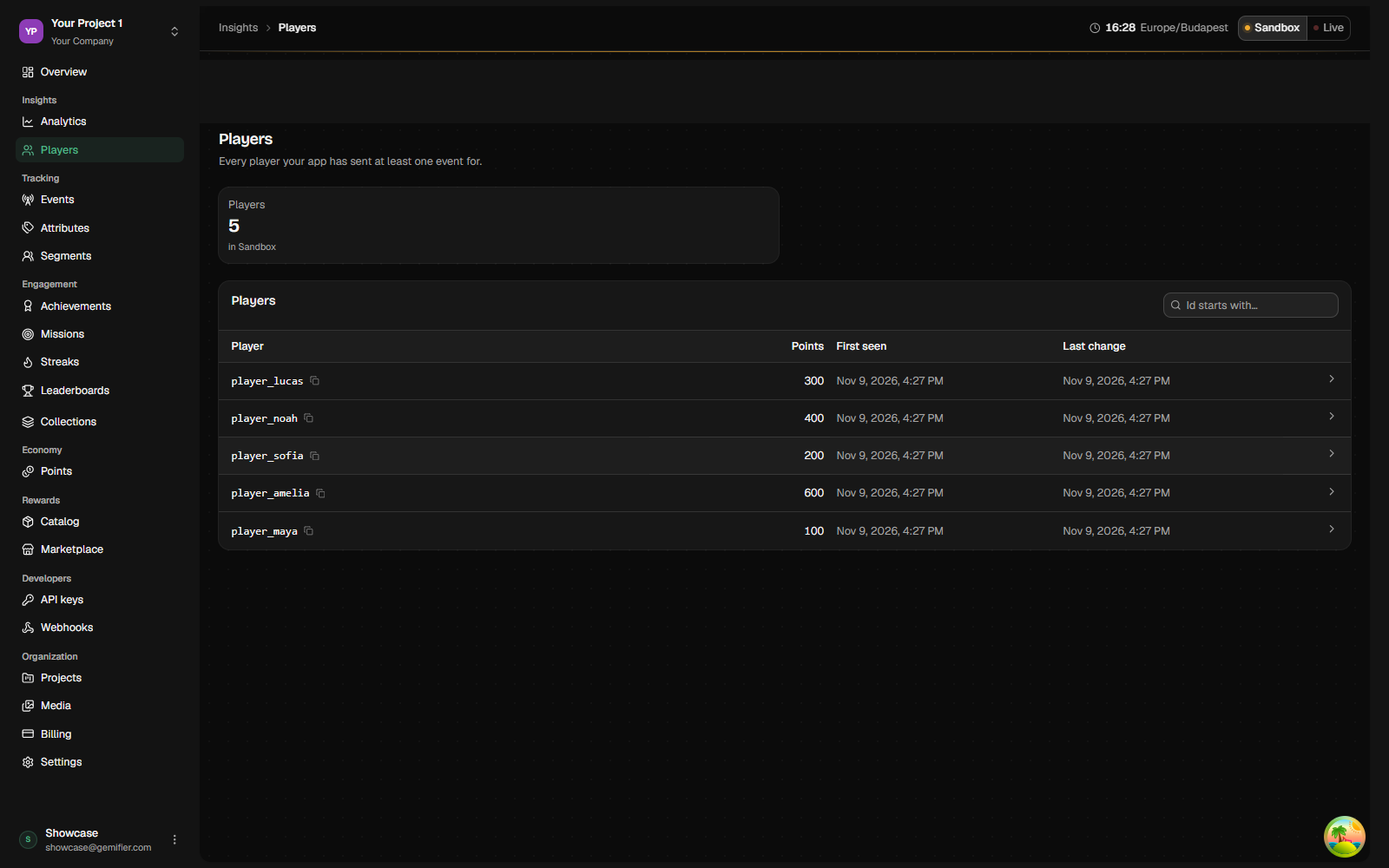
A searchable roster of every player in an environment, and one profile deep: what is set on them, what they did, what they earned and what they bought.
A prefix search, on purpose.
Every player, newest first, searchable by the identifier you gave them. The search matches the start of the id, not anywhere inside it, and says so rather than quietly missing a result.
- The search lives in the url. A roster view is linkable and survives a reload.
- The page position does not. It belongs to one search, and a link to page four of somebody else's would not be useful to send.
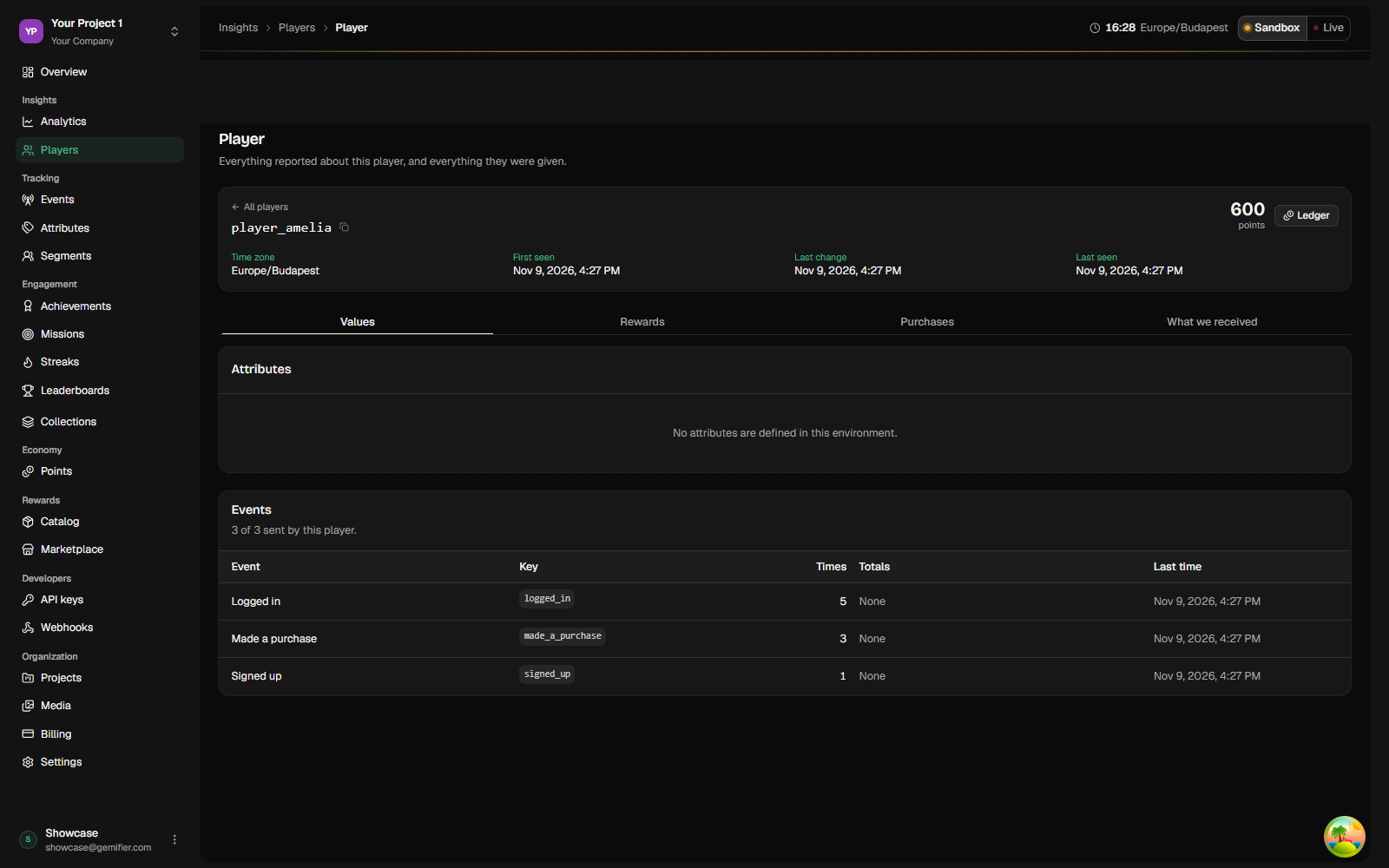
Everything an operator can see about one customer.
Five separate questions, asked one at a time, so the answer somebody came for is never below a page nobody scrolls to the bottom of.
| Tab | What it answers |
|---|---|
| Values | Every attribute and event defined in the environment, whether or not this player has one set. |
| Activity | The raw events we actually received, most recent first. |
| Rewards | Every grant this player earned, and whether it is pending, granted or failed. |
| Purchases | Every marketplace purchase, what it cost, and its delivery status. |
Values lists every definition, not just the ones with a value. "Never set" and "set to something else" are different answers to the same support question, and only one of them is a bug.
Opening this screen changes nothing.
A player's own mission feed can lock them into a mission the moment it is read, by design. This operator view deliberately does not carry that side effect.
Tell us what a support ticket needs to answer.
We will show you where that answer already lives, and whether it is on this screen or on the roster behind it.